
25 July 2026
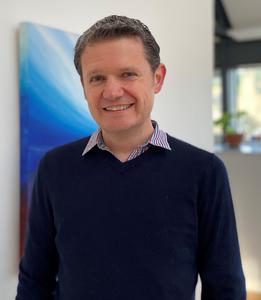
James Ainge (Professor and Head of School of Psychology & Neuroscience)
Tell us about your research and how it connects to memory/identity studies?
I am a neuroscientist interested in how the brain facilitates our memory. Most of my research concerns the memories for our everyday experience; episodic memory. My research concentrates on a network in the brain centered on the hippocampus and entorhinal cortex. Damage to these areas results in profound amnesia particularly deficits in episodic memory. These areas are also the first to degrade in Alzheimer’s disease. I use a combination of studies in humans and animal models to examine the neural mechanisms that support episodic memory.
What are you working on now?
The main focus of the lab at the moment is a fascinating phenomenon called neurogenesis. In most parts of the brain we do not develop new neurons after adolescence. The exception to the rule is the hippocampus where new neurons are generated everyday. We have recently shown that increasing the number of these newborn neurons improves our ability to make difficult memory decisions (i.e. to remember the difference between very similar experiences). Another interest of mine is navigation. Part of our memory concerns knowing where we are and I have a long standing interest in understanding how the brain supports this ability. In a recent project we examined how a particular type of neuron in the entorhinal cortex allows us to work out how far we have walked. Finally I am very interested in context specific memory. Context is a term that is used widely in memory research, often to mean different things. Together with a group of interdisciplinary researchers (including colleagues from Philosophy, English & Social Anthropology) we came up with a novel of way of defining context that depends on how memories are retrieved.